Another cruise, and it has to be something special, places and countries that you only visit once in a lifetime. We wanted to go to Japan, but the pandemic threw a spanner in the works. We liked Singapore, it’s a nice starting point. One cruise caught our eye: the one to Sydney. However, this cruise is only offered once a year and the cabins are quickly snapped up. The route was supposed to take us via Bali along the east coast of Australia to Sydney. Flying home from Sydney was out of the question. We wanted to see the Harbour Bridge and the famous Opera House. We had also heard good things about a trip to the Blue Mountains. Another idea was to take the Indian-Pacific train across Australia, but this was out of the question due to our financial means. However, the journey from Adelaide to Melbourne on The Overland was feasible. Then back to Singapore and on to Frankfurt with a one-day stopover. You can’t get something like this as a package tour, so we booked everything ourselves from home: the flights, the cruise, the train journey, the hotels and the excursions.
Flight and arrival
As soon as I had fastened my seatbelt, the plane took off. I spent the 12-hour direct flight mostly lying down on the three seats in my row, dozing or sleeping, interrupted only by the seatbelt times during turbulence and at dinner and breakfast. However, the constant screams of protest from the toddlers a few rows behind me, who complained about being strapped in or sleep deprived, were annoying.
After one more lap than planned, the big Airbus touched down and we had landed at Changi International Airport in Singapore. Now we just had to go through the immigration desk, grab our bags and head to the hotel. I looked up the address of the hotel and showed it to the cab driver, who knew immediately. The hotel was on the corner of a main road. The room was classified as “superior” if it was more than 8 m² and had a window.
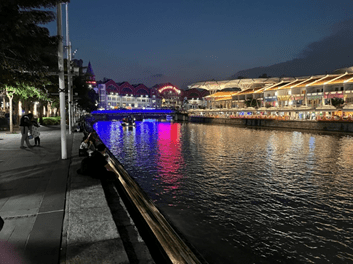
It was already dark when we set off again. Everyone wanted to go to the air-conditioned shopping mall “The Central” with its integrated metro station or straight to “Clarke Quay” on the “Singapore River”, the former colonial trading center, which has been beautifully expanded with boat moorings, restaurants and cafés. There were countless restaurants that differed in terms of facilities and price. Almost all of them offered Chinese or at least Asian food and were well frequented.
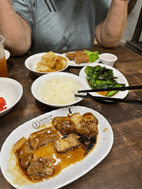
When we were almost on our way home, we discovered a street restaurant that was full and geared towards take-away. There was a place with a table and two stools next to the kitchen. We ordered all kinds of Chinese dishes as well as iced tea and lemonade, as the restaurant didn’t have a beer license.
The cruise started on this day, but we still had time until the afternoon, and this is how we planned to spend it: First breakfast, then we planned to take a boat trip on the Singapore River and go for a stroll.
Embarkation day
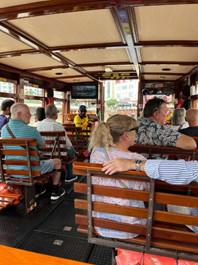
We got our tickets for the boat trip a quarter of an hour later, along with two bottles of water, as it was getting hot. The 40-minute boat trip on the Singapore River departed from Clarke Quay, once a trading center and harbor, now a popular nightlife district. We sailed down the Sibgapure River through a mixture of old and modern buildings. The high quay walls tempt you to jump into the river, today recreated by bronze figures. Finally, the boat reached Marina Bay, where the Marina Sands Hotel with its characteristic ship’s hull on the roof can be seen from afar.
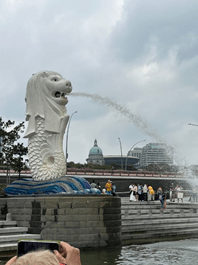
The boat makes a round in the bay and passes the Merlion, the symbol of Singapore, spitting water, as you would expect. The Merloin is a mythical creature, it has a fish body and a lion’s head, its name comes from Mermaid and Lion.
Embarkation

We actually wanted to walk through the park to see some of the sights, but it was just too hot. The large mall, The City, offered some cooling off, but we didn’t feel like going for a drink, so we headed to the hotel to pick up our suitcases. For the cab to the ship, it was necessary to name the correct terminal, as there were two in Singapore.
It was only a short cab ride to the Marina Bay Cruise Center for a few S$. We could also have taken the metro, it’s only three stops from the hotel, but with suitcases it’s quite a walk. Maybe we’ll use it on the return journey. We know from experience that you need a rechargeable chip card for this, which you have to place on the locker display before and after the journey. If you don’t have enough credit, you won’t get through. A helping hand is worth its weight in gold.
We were at the terminal before the agreed time and checked in our suitcases by stapling the carefully folded section with the cabin number as a loop. We hoped to find our luggage outside the cabin door as soon as possible, as we had already had to wait hours for our suitcases on previous cruises.
There was a lot going on in the entrance hall. People stood in rows, sorted according to their arrival time. Without further ado, we joined the latest line. Our check-in app was checked together with our passports. A furtive glance at the passports around us revealed that most of the passengers were Australian. The others did the same, and as we had EU passports, we struck up a conversation with the other passengers, which shortened the wait at the hand luggage checkpoint. My cell phone in my back pocket couldn’t get through, which is why I was searched. Next it was our turn at immigration. A sign indicated which documents we had to show: the check-in app with the seapass, the passport, the e-visa for Australia and the visit visa for Indonesia. The latter was new to most cruise passengers and had not been communicated. But the cruise line had made provisions: at 35 counters you could get a visa for 35 SP$. This meant we could finally leave the country. We presented our passports and the automatic barrier let us through.
We handed in our passports at the gangway to the ship in exchange for a receipt. Now we had to go through the identity check on the ship, which was supposed to work via a QR code on our cell phones. However, as my cell phone failed to work, I dug out the paper version of my Sea Pass and we were able to board the ship. Now we just had to find our cabin and recover from the stress. In cabin #6165, the time had come: the Sea Passes were ready and the door opened smoothly.
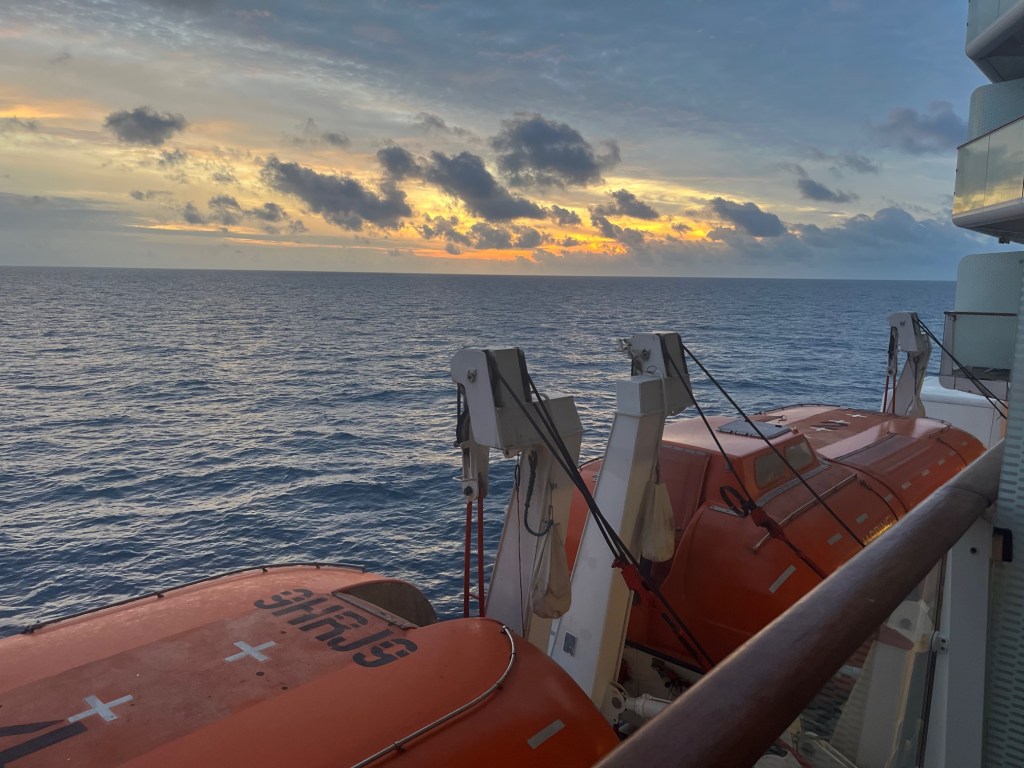
Almost everything was in order, only the toilet paper was missing in the bathroom. We complained about this and quickly received the important utensil from a nice young woman who was responsible for room service. She was sure of a first tip. The cabin was large, had a balcony and was located on deck 6, just above the lifeboats. The beds were crosswise and the storage space was tight, which Eleonore particularly disliked. Where to put all the things? The bathroom was larger than those in some later 5-star hotel rooms. We were delighted, also that our suitcases had already been delivered. Great! The restricted view didn’t bother us, on the contrary, later work was taking place on the lifeboats, which we watched with interest. This provided a change from the same old view of the waves and the sea.
We had dinner at 6pm in the main restaurant in a side compartment of the two-storey, palatial hall. There were tables for two for couples, which were set up so that we could communicate with our neighbors. Our German attracted attention as we were surrounded by American diners.
We were taken to our table. The service consisted of one or two wonderfully nice black people: Josef, the waiter, was from the Congo and his assistant Pierina was from Ecuador, where I wouldn’t have guessed she was from an ethnicity standpoint. I exchanged a few words with her in Spanish. The usual procedure on American ships is as follows: The chair is pulled up, the napkin is placed on the lap and the menu card is handed out. We were familiar with the menu from other ships of the shipping company, as it is standardized. The starters include shrimp cocktail, onion soup and Caesar salad, the main course is dominated by steak, pasta and fish variations and dessert is not complete without crème brûlée, apple pie or New York cheesecake. If you want something a little different, you can visit the buffet café or the pay-as-you-go restaurant.
I almost forgot the drinks. As is usual at all meals, there is ice water, which is diligently refilled. You have to pay for all other drinks: For mineral water, cola and soda the usual price, for beer it gets more expensive and for wine it doesn’t go below 15 $ per glass. It is slightly cheaper in bottles. It was different on previous trips: drinks were free for Loyalty guests. Now we have to go by the time: Between five and seven in the evening, free drinks are served for us, but not the higher-quality stuff. One consolation is the free cappuccino at all times. We therefore leave the undrinkable normal coffee for breakfast – previously too weak, now too strong.
We only half-watched the subsequent welcome show: The Elton John interpreter was not to our taste, and we were also tired from the day’s experiences. The cabin prepared for the night invited us to sleep – truly a 5-star advantage. On the Royal Caribbean ship, the cabin is only done once a day.
The days on board
After the first night, the ship had a day at sea, as it was still a long way to the next port, Benoa in Bali. Going to the pool and lazing on the sun lounger was too hot, it was better to spend some time in the fitness room. For those who wanted neither, the ship offered lectures, one on the next port of call and one on an interesting topic.
Everyday life on board until dinner
If it is not an excursion day – and that is every third day on this cruise with one exception – there is a lecture on the next shore leave with all the information worth knowing about the country and its people, its history and the animals and plants that live there. Further lectures followed until the end of the cruise, for example on navigation or the first female astronomers (“Ladies of the Night”).
You can eat in the restaurant with service or in the Ocean Café in buffet form. We usually went to the lunch buffet, which is what we did on this cruise. There were American, Asian and also German dishes such as beef roulades, sauerkraut and roast pork or chicken fricassee. We always made ourselves a “family plate” with different appetizers so that we could try everything once. Our German conversation caught the attention of our mostly Australian fellow travelers, who asked curiously where we were from.
At half past four, we got dressed for the evening, depending on what was recommended. However, we didn’t see anyone in tuxedos or evening dresses, as used to be the norm. From 5 p.m. to 7 p.m., there were free drinks at the bar for members of the Captain’s Club, which included us. Shortly before 6 p.m. we had to report to the main restaurant for dinner.

For our Bali excursion on the fourth day, we had to fill out an e-form. This involved downloading an app in which we had to answer the specified questions. I stumbled when entering a second person and the amount of unaccompanied baggage. A second officer helped. Now the form just had to be uploaded with “Submit”. Now nothing stood in the way of our trip to Bali.
Solemn mysteries of the ancient order of the deep
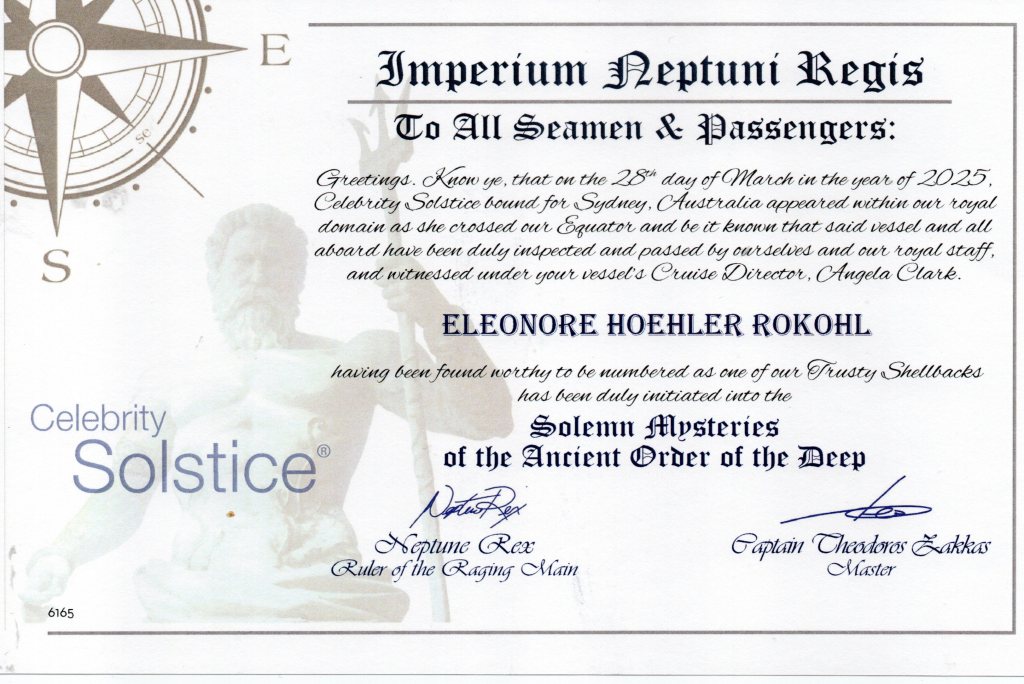
In the meantime, we had missed the fact that the Celebrity Solstice was crossing the equator. Appropriate celebrations for the christening of the equator were due to take place, and Neptune wanted to be asked for permission. We were already familiar with this spectacle. The person to be baptized is soaped up with fish oil or shaving foam, makes amends to Neptune and is then cleansed by being thrown into the pool. It is usually the captain’s turn, but interested passengers can also take part. Somehow we missed this, but we found Neptune’s certificate in our cabin.
To the temples and gods of Bali
After two days at sea, the ship docks in Benoa in Bali, Indonesia – the country that gave us the unplanned visitor visa. We read a lot about Bali and its exoticism and beautiful beaches in the travel brochures. We were curious and had booked an excursion in advance that wasn’t too long and showed us something of Bali’s culture: the Uluwatu temple tour. We were group 17 and left the ship as a group.
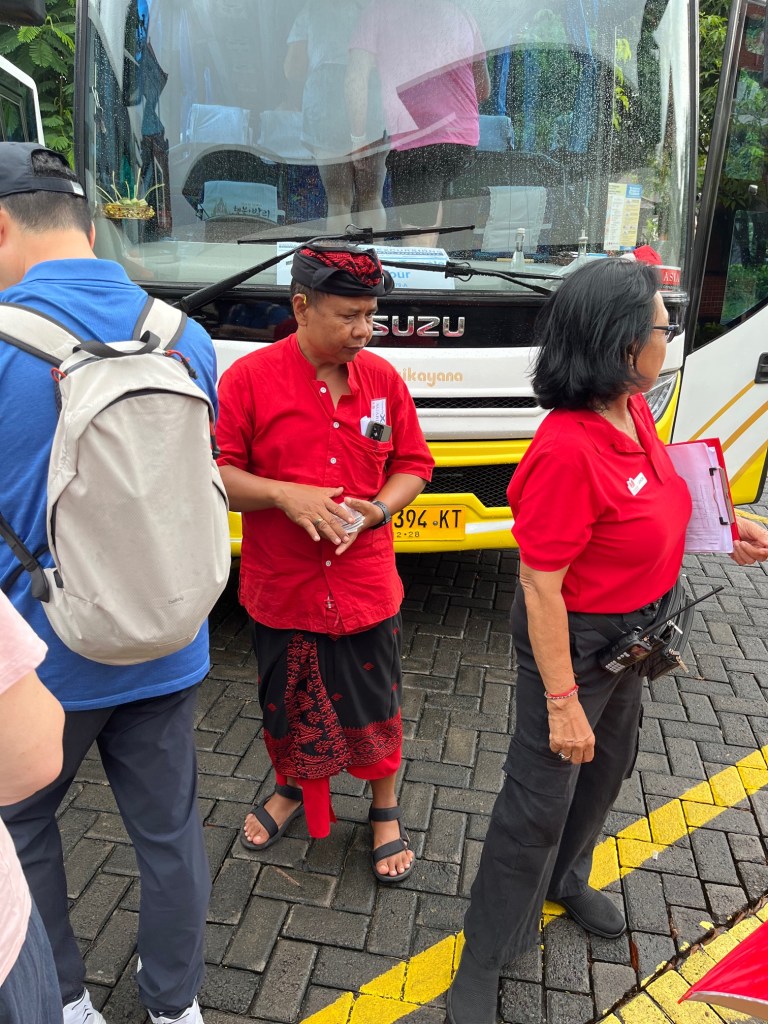
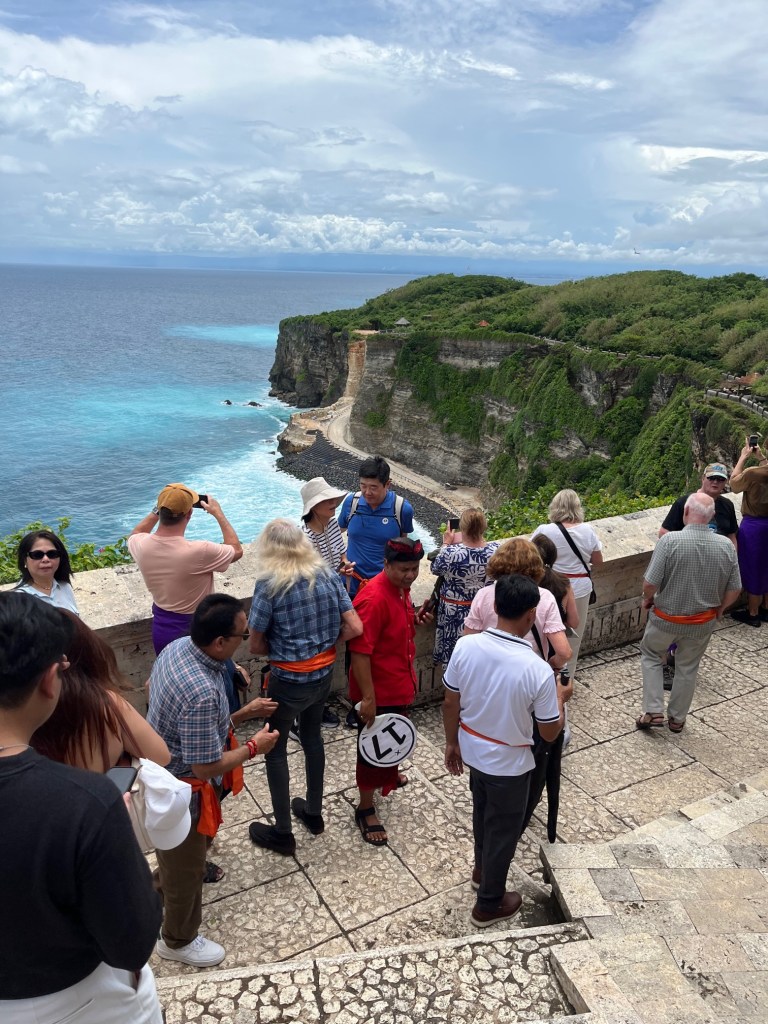
We had to show our visa to the immigration officers, which was met with a weary look. We then headed for bus number 17 and were greeted by a man in Indonesian clothing who was waiting for his bus load. Once everyone was on the bus, he introduced himself as the tour guide and said that we needed an hour to get to the temple complex.
We would be visiting it and he pointed out that we should watch out for the macaques living there, whose hobby it is to steal the visitors‘ possessions in exchange for treats. A ranger made sure that nothing happened to the monkeys.
I almost forgot that everyone who had bare knees had to cover them with a dark blue sarong. Finally, we entered the largest Hindu sanctuary in Bali. We wandered through the temple complex, which is adorned with god-like monuments. The monkeys were lurking, but kept to themselves.
Compulsory inspection by customs and immigration authorities
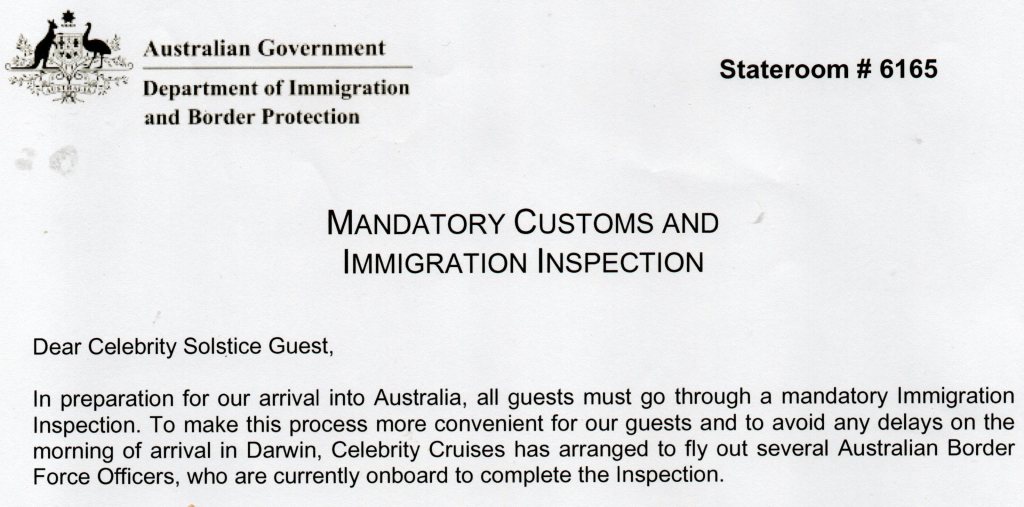
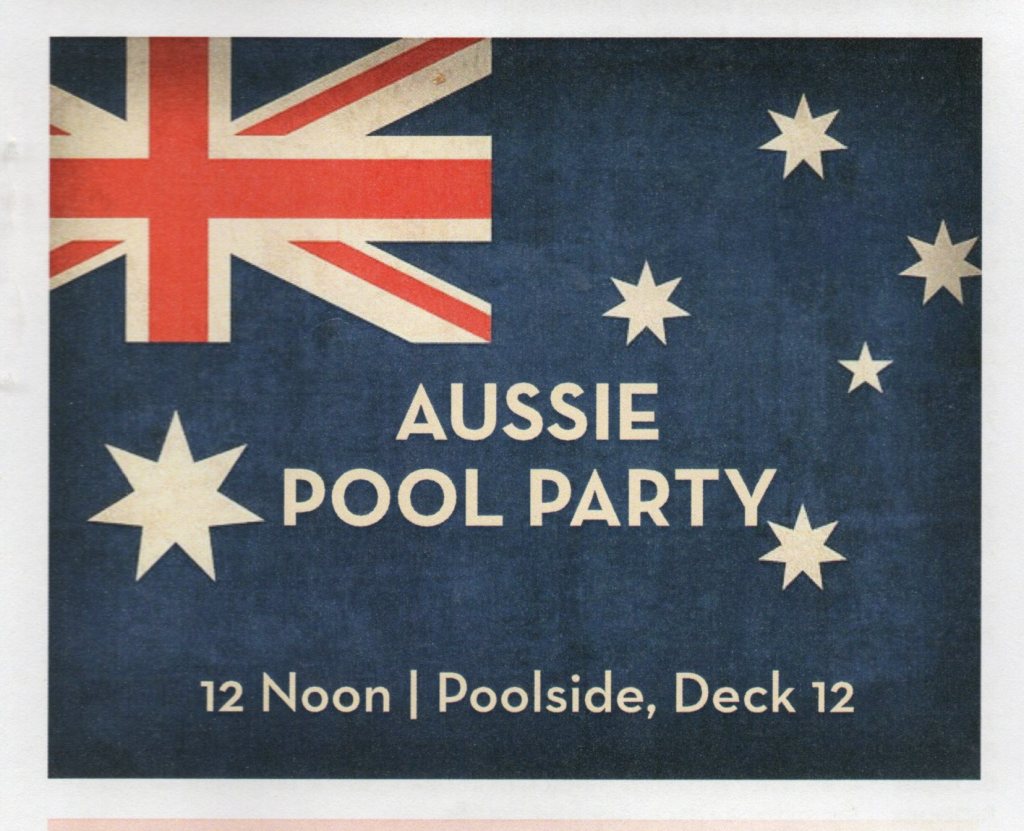
We had to be at the place of entry formalities at the specified times. Our passports were handed to us beforehand. In addition to the passport, the Sea Pass Card and the fully completed orange Incoming Passenger Card, which must be handed in on arrival in Sydney, had to be presented. The customs regulations were also pointed out. We got through the procedure without any problems and then turned our attention to the rest of life on board. Australia can come. There was a big pool party to get us in the mood.
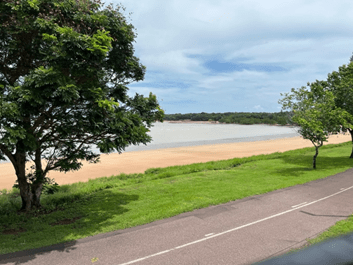
Arrived in Darwin
We opted for the hop-on hop-off bus as we had some shopping to do and it gave us the opportunity to go shopping in Darwin city center. Afterwards, we thought about taking a round trip on the bus to see all the sights from the upper deck. We got off the bus in the pedestrian zone and did our shopping. Then we took a few photos of the traces left behind by Cyclone Tracy in 1974.
We got back on the bus and continued our journey on the upper deck. We would have liked to visit the War Museum and the Museum of the Royal Flying Doctor Service, but the heat was getting to us, so we preferred the cool breeze. The tour was enough to give us an overview, and it wasn’t too late for lunch on the ship. It was only now that we realized that we had completed the immigration formalities on the ship two days earlier.
On the cruise ship
We have now been traveling on the ship for nine days and it is sea day again. The ship is still 450 nautical miles away from Port Douglas, where it is due to arrive tomorrow at 8 am.
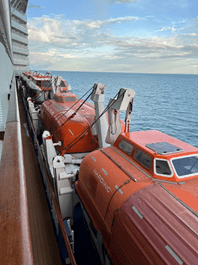
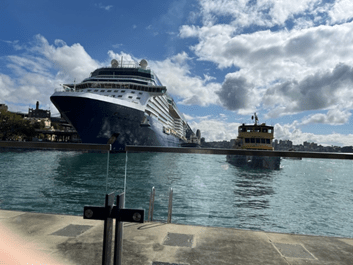
I still have time before the lecture on Port Douglas and the surrounding area, so I take a look at the ship. It is the Celebrity Solstice, an older ship that was built in 2005 at the Meyer shipyard in Papenburg and renovated ten years later. It is actually a five-star luxury ship, but the ravages of time have taken their toll and it is in urgent need of an overhaul.
The ship is not beautiful because it has almost only balcony cabins. Deck after deck, they look like honeycombs, reminiscent of a high-rise housing estate. But this trend is catching on and all shipping companies are installing lots of balconies because that’s what customers want.
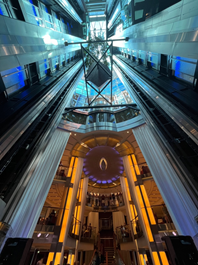
Inside, the ship is divided up as follows: Decks 3 to 5 contain the reception, cafés, bars, stores, a movie theater and a casino. In the center, a tree is planted halfway up, which is the ship’s focal point, so to speak. At the very top aft is the Ocean Café, the breakfast room for everyone. At the front are the facilities for sportsmen and women. Of course, it is similar on all cruise ships, just a little more beautifully designed.
Wildlife Habitat and Rainforest
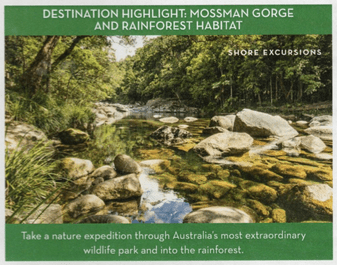
Celebrity Cruises would like to thank you for booking the “Moss Gorge and Rainforest Habitat” excursion, the highlight of the destination. At the same time, they point out that this tour is not suitable for guests with pre-existing medical conditions. Well, we accepted the concrete surfaces, gravel paths and wooden walkways as well as the path up the gorge.
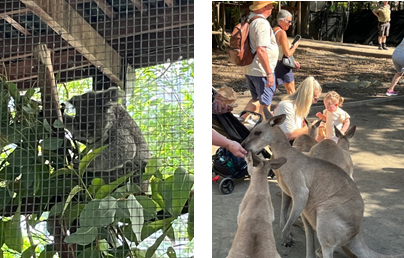
The Wildlife Habitat is a zoo in the rainforest, which is divided into individual zones that you can walk through. After an hour, the bus took us to the Mossman Gorge in the oldest continuously preserved rainforest in the World Heritage-listed Daintree Rainforest.
At the base station, we changed to the shuttle bus that took us to the starting point in the gorge. We decided to take the middle route to the suspension bridge over the gorge. Every now and then we stopped, sat down on a bench and looked at the natural heritage.
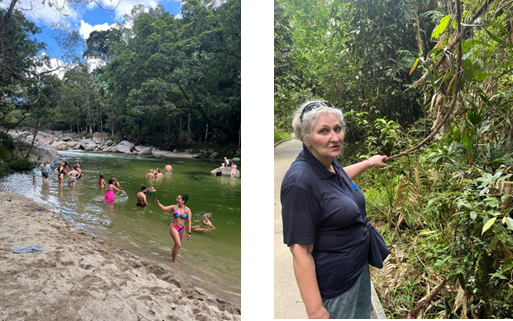
We actually still had an hour until departure, but the tour guide collected everyone beforehand. So we sat on the bus for another half hour until everyone had boarded.
We were back on the ship in the afternoon. That’s when we realized how exhausting the trip had been. We rested and almost missed dinner. And we were already thinking about tomorrow, because we had a sightseeing flight over the Great Barrier Reef.
The boomerang
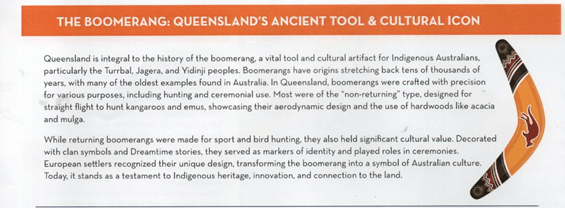
An ancient tool and Queensland cultural icon The history of the boomerang, an important tool and cultural artifact of Indigenous Australians, is closely associated with Queensland, particularly the Turrbal, Jagera and Yidinji peoples.
Most were of the ‘non-returning’ type, designed for straight flight to hunt kangaroos and emus. The return type boomerangs were made for sport and bird hunting and had a high cultural value. Decorated with clan symbols and stories from the Dreamtime, they served as a sign of identity and played a role in ceremonies.
Airlie Beach and the flight over the reef
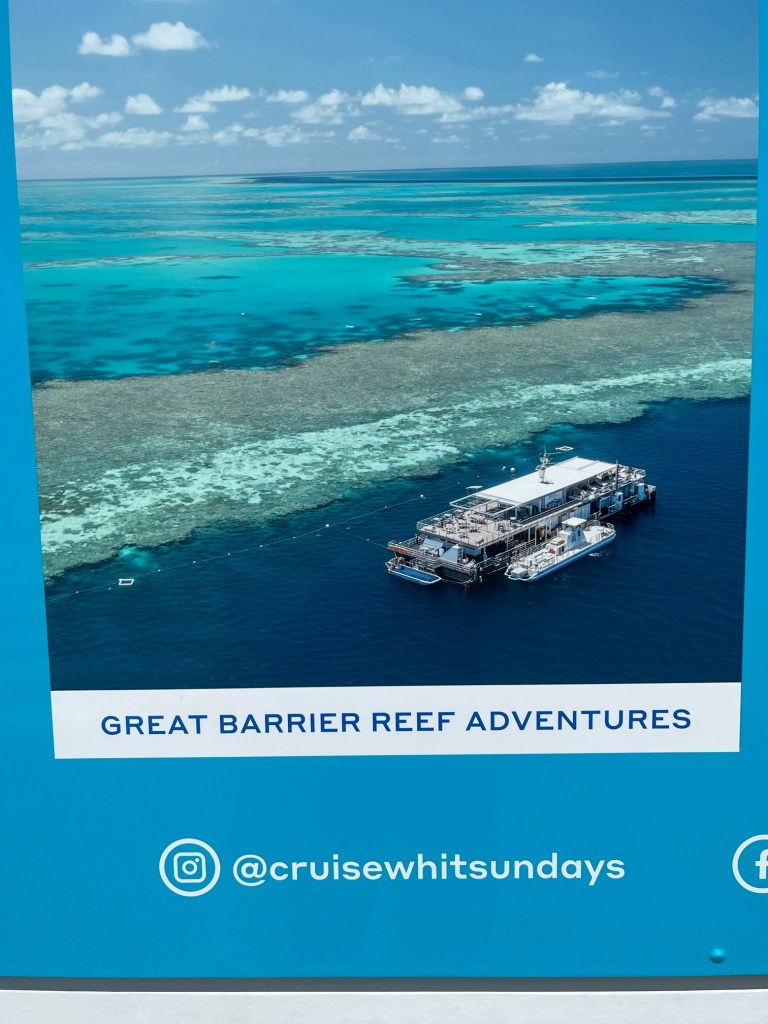
The world-famous reef stretches hundreds of kilometers north from there and is so big that it can be seen from the moon. We also decided to do this and booked in advance with a large provider, as the offer from the shipping company was simply overpriced.
When booking, the company first wanted to know where we wanted to be picked up. Whitsunday Flights suggested the easily accessible ferry terminal as the pick-up point and emailed photos of the location, including the pick-up vehicle. On pick-up day a white minibus rolled up, but it was the wrong one, 10 minutes later the right one arrived- After half an hour we arrived at the airfield, which was actually an airport where large passenger planes also landed.
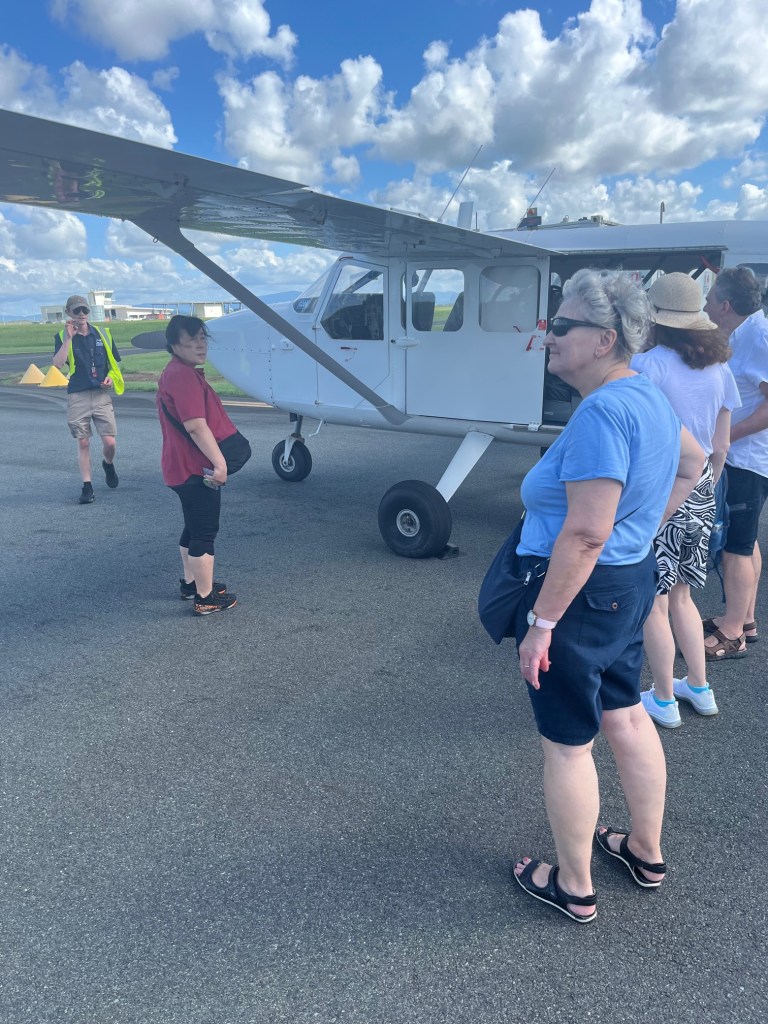
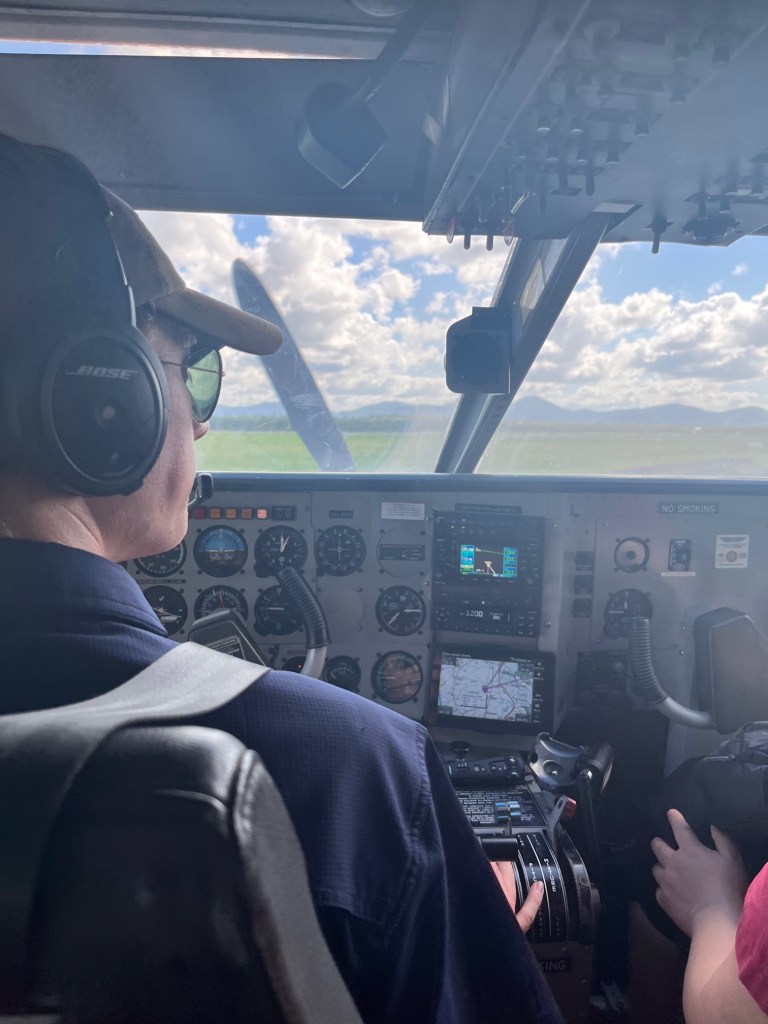
After all the passengers had climbed out of the plane and the usual photos had been taken, we were allowed to enter the airfield. There we were given a packet with a life jacket and instructed on what to do in the event of an emergency landing on the water.
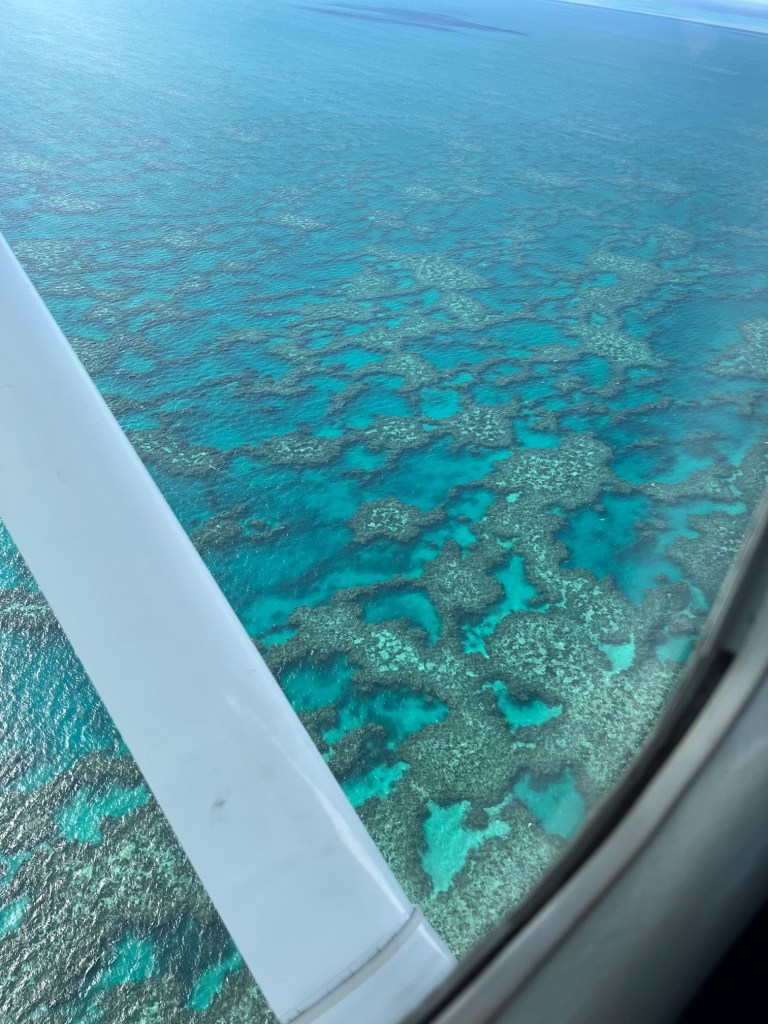
I sat behind the pilot, a young man who was no older than 30. Over the pilot’s shoulder, I could see how high and how fast we were flying. The flight took us over the famous Whitsunday beach out to sea. Over the headphones, we heard the pilot say that we would reach the Great Barrier Reef in ten minutes
From above, we could already see the spray splashing against the coral reefs, and finally we were flying over the reef at an altitude of around 200 meters. That was the moment that made the whole flight worthwhile. After a good hour, we climbed out of the plane and were glad to be able to stand upright again.
Not far to Sydney
After two eventful days, we first had to take a break. The best place to do this was at the evening shows in the theater. There were two shows every day, one at 7pm and one at 9pm. We always went to the first one as it fitted in perfectly after dinner.
There were artists, magicians, comedians and musical performers – a colorful mix that offered something for everyone. We liked some things better, others less, but the “Singers and Dancers” were always great with their show. The last two days on the ship to Sydney passed like this, but I have to describe one event in more detail.
Martine Showtime with Daniel Thomson
Country Revival in the afternoon – that suits me and others in my year too. The ship’s theater was full of people who were very familiar with the songs of Johnny Cash, John Denver, Joan Baez and other country greats. When the final song, “The Gambler”, began, tears came to my eyes. As I looked around, I saw that others felt the same way.
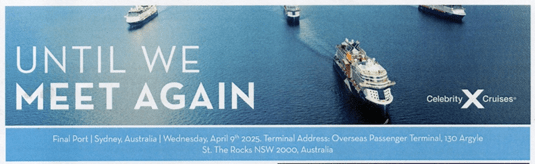
Then the day of disembarkation arrived and our cruise came to an end. The evening before, the ship’s newspaper Designed for you was in the cabin. Among other things, it contained the following information:
A MESSAGE FROMTHE CAPTAIN
Captain Theo and the entire crew would like to thank you for spending your cruise vacation with us. It has been a pleasure serving you during this 2688 nautical mile voyage. We look forward to welcoming you aboard one of our Celebrity Cruises® ships again soon.
BEFORE YOU GO SEAPASS® PAYMENT
Guests who fund their SeaPass® account with cash are strongly encouraged to do so one night in advance, no later than 8:00 a.m. the morning of departure. Accounts with credit cards on file will be processed automatically for your convenience and you will not need to check out.
THE EVENING BEFORE DEPARTURE
Please remove all old tags from your luggage, with the exception of your ID card. Attach the numbered baggage tag assigned to you to each piece of baggage. Place your luggage outside your stateroom from 6:00 p.m. to 10:00 p.m., unless you are participating in our Self-Assist Express Departure and departing with your own luggage. Do not pack your SeaPass® card, airline tickets, passport or proof of citizenship, medication and clothing for the next day. Please leave your cabin by 7:30 a.m. at the latest.
Autumn in Sydney
It seemed as if fall had arrived here. When I look out of the window of our hotel room, I can see the tree in front of it with just a few leaves. Now I’m sitting here thinking about our arrival in Sydney.
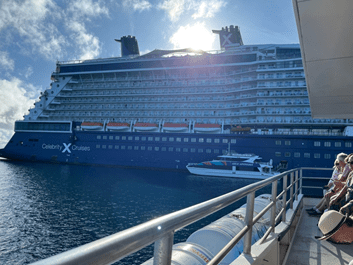
We had to leave the cruise ship at 7:30 am. Before that, we had breakfast on the balcony while admiring the famous Opera House. The luggage tags for retrieval had the number 1, so we were pretty much the first to pull our suitcases out of the terminal’s large storage hall. We pressed the entry card into the immigration officer’s hand and the cab to the hotel also went smoothly: we took the elevator to the cab rank. The older cab driver loaded the suitcases and half an hour later he unloaded them in front of the hotel in the city center.
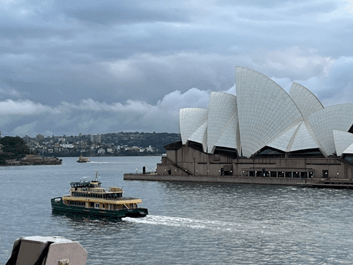
We grabbed a map of the city and asked the young receptionist to explain how we could get to Circular Quay. She told us to walk up the street, then turn left and take the L2 or L3 streetcar to the last stop on the second cross street.
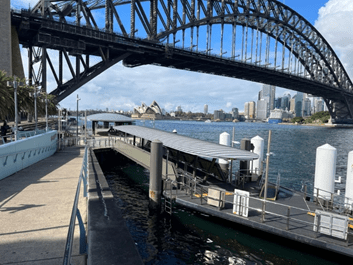
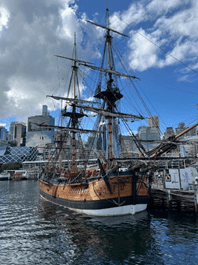
Eleonore wanted to see the Harbour Bridge from the other side. So we bought a rechargeable chip card that is valid for all public transport. We left the ferry just after the bridge, walked under the bridge and reached the “City Lookout from Milson Point”, from where we had a magnificent view of Circular Bay. We took the next ferry to the Maritime Museum, where we were able to admire the replica of James Cook’s HMS Endeavour.
From there, we took the streetcar to the main station. At the main station, a friendly person helped us plan our train journey to the Blue Mountains.
Just two stops further on the streetcar, we were already in the huge old market hall. Well-fed, we made our way back to the hotel.
We discovered a quaint steak and burger restaurant for the evening. We were not disappointed: we ordered the standard meal, fish & chips and a cheeseburger, both of which were on the Wednesday special.
Trip to the Blue Mountains
The 9 a.m. train was to take us to our excursion destination, the popular Blue Mountains west of Sydney. We arrived at Sydney Central station, which is about a 10-minute walk from the hotel, in good time and caught an earlier train. Only the first four carriages left for the destination. We boarded the last one and took a seat on the upper deck. Then it was two hours, bit by bit, into the mountains, through Sydney’s suburbs, further and further west. The small train stations were reminiscent of Alpine towns. We got off at a place with the strange name of Katoomba and took the hop-on hop-off bus, as recommended. The counter lady announced that the bus should wait for us. The bus has 26 stops.
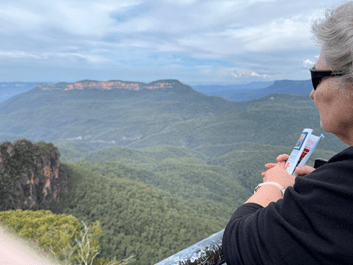
We got off at the sixth and marveled at the main attraction of the Blue Mountains: the Three Sisters, a rock formation on the edge of a wide valley. From there you have a great view of the entire wooded area as far as the blue mountains in the distance. We left out another interesting point. There is a lift to the top and a funicular to the bottom of the valley – all too commercial. We preferred to be driven around on the upper deck until the tour was over. Unfortunately, there wasn’t enough time for a snack, otherwise we wouldn’t have been able to catch the next train back. I would soon have forgotten. Eleonore bought two locally made koala bears for our grandchildren.
Evening in The Rocks
The Rocks at the western end of Circular Quay are the oldest part of Sydney. Today, the area is a magnet for tourists from all over the world – no wonder, because the location on Circular Quay is simply fantastic. We didn’t want to miss out on this and headed out again in the evening.
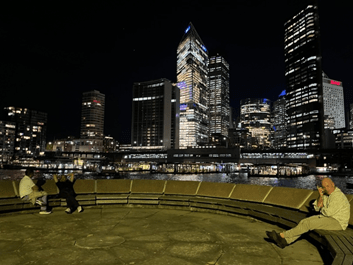
From the ferry docks, we walked along the Quay, leaving the skyline of the city center with its lights behind us. We passed the cruise terminal and saw the first upmarket restaurants. At the back of these, we came across the restaurants we were looking for. We found a seat in one that met our expectations. The travel guide hadn’t promised too much.
Goodbye Sydney
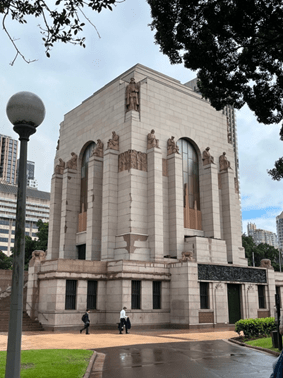
On our last day in Sydney, we visited the ANZAC Memorial, the Australian Museum, St. Paul’s Cathedral and the Hyde Park Barracks. We still had a good half day for this, as our flight to Adelaide was later. So we asked at the metro station for a transfer to the airport. However, it was neither convenient in terms of time nor price, so we opted for a cab.
Although the metro station was called “Museum”, it was still quite a walk to the Australian Museum. Right next to the metro station at the southern end of Hyde Park is the ANZAC Memorial, a huge war memorial that resembles the Völkerschlachtdenkmal in Leipzig. The memorial houses the Eternal Flame and, in the crypt, the Angel of the Fallen.
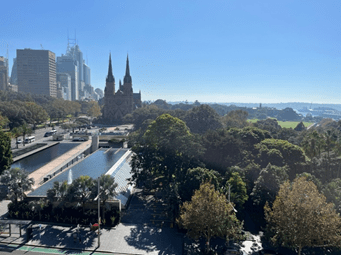
Continuing through the park, in the shade of the old trees, we reached the Australian Museum, which had just opened. Of course, we also visited the huge dinosaur skeletons and the replica of a T-Rex after the meteorite catastrophe, which were presented very vividly in their original size.
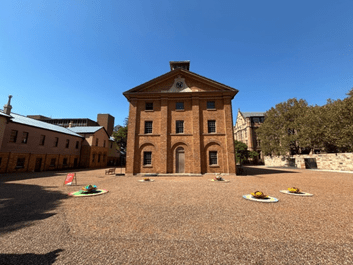
The barracks at the northern end of Hyde Park are a piece of Australian history. Entry to Hyde Park Barracks is free and there is an audio device in German that guides you from point to point. First the barracks were built, then today’s Hyde Park.
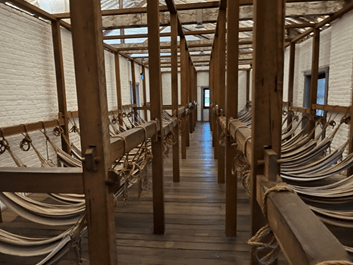
In the barracks themselves, displays depict the life of the convicts: how they had to toil and how they were punished for misdemeanors. This came to an end in 1848: the barracks were converted into a shelter and home for girls and women arriving from the problem areas of Europe. The Hyde Park Barracks have existed as a museum since 1898.
The days in Adelaide
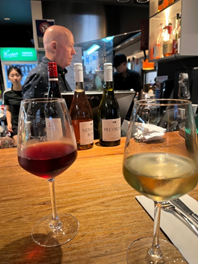
We arrived in the evening in the dark on a budget plane. A friendly cab driver took us to the hotel. At the hotel we were given a street map with a scale, which led us to believe that everything was just around the corner, but this was not the case. After a brisk walk, we reached the tourist office, which was unfortunately closed on this Saturday.
Two things were recommended: visit the Old Central Market and take the streetcar to the popular beach suburb of Glenelg. We found the market a few streets away from Victoria Square. It was crowded, but Eleonore got the coffee she wanted and a seat.
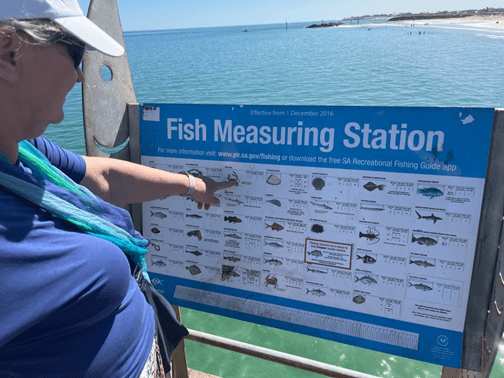
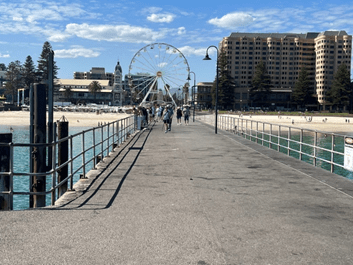
After about half an hour, we were in Glenelg, which was really popular and lively. The streetcar ran almost right up to the beach. Less than 100 meters further on, we had our feet in the water. The weather was perfect for swimming, but not for us, but for the others. We imagined a trendy fish restaurant and not one of the many fish and chip shops. We found a place on the main street that looked solid but had unreasonable prices. The selection of fish dishes was good, but the wait was long.
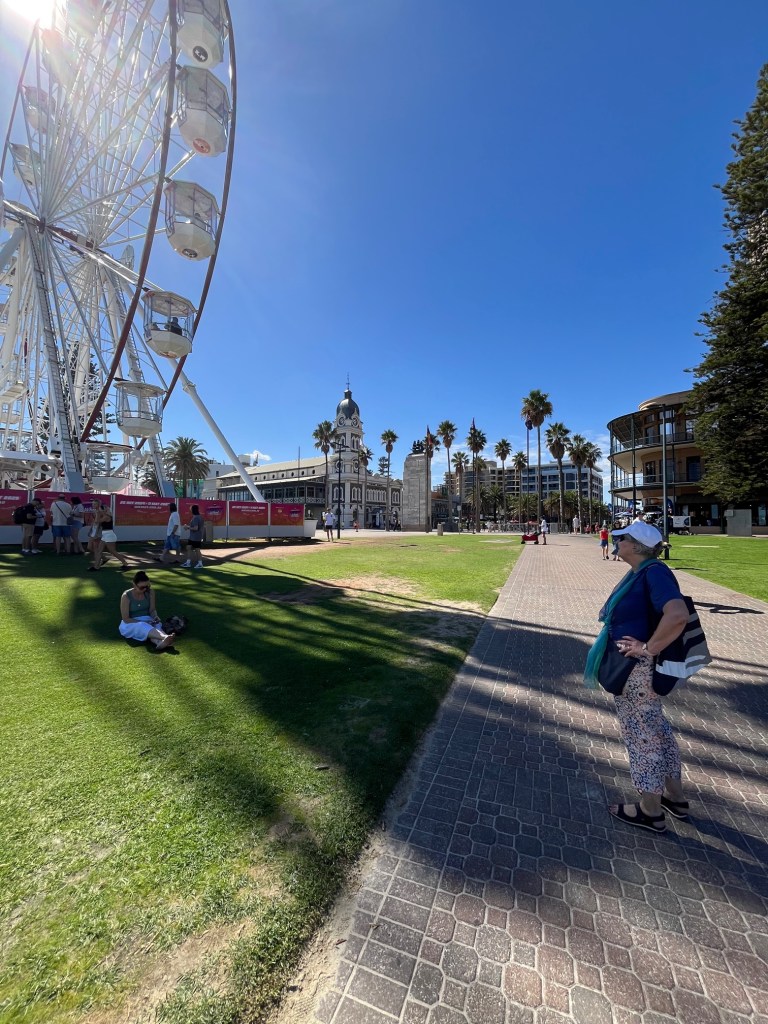
Having eaten our fill, we took the streetcar back while we were already thinking about the evening. It couldn’t be too late, because we wanted to take the train to Melbourne the next morning.
At the main station, we met the whole of Adelaide in a festival mood. I guess it was the Gold Coast Suns vs North Melbourne, two famous rugby teams meeting in the Australian Open. The atmosphere was already great in the station concourse. The Multicultural Eid Festival was also taking place in Adelaide, which must have been an outstanding event that drove up hotel prices. But then we started our retreat from the hustle and bustle.

With The Overland through South Australia and Victoria
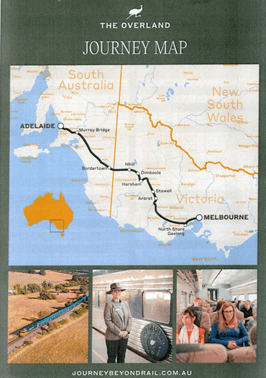
“The Overland” was the first intercity service in Australia and connects the cities of Adelaide in South Australia with Melbourne in Victoria. We therefore flew to Adelaide and set off on a Sunday.
To get a cab to the station, the hotel had a strange arrangement: you had to press a small display twice and confirm once and of course enter the time and day. We waited anxiously for the cab because we didn’t trust it. But everything was fine, the driver knew what was going on and delivered us and our luggage to the station. We had booked the “Red Premium” category, which means 1st class with meals. The coach was equipped with panoramic windows through which we could enjoy the passing landscape.
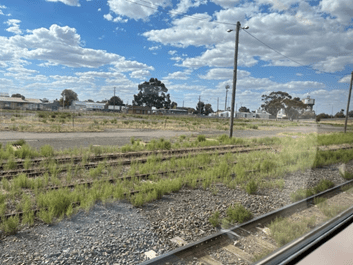
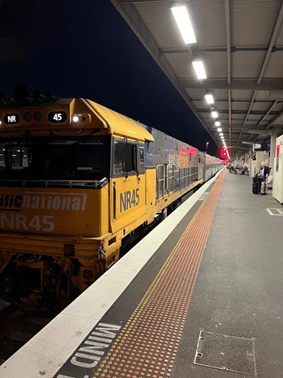
First we drove through mountainous country, then through wide plains with farmland and finally the train plunged into the juggernaut of Melbourne. After a good eight hours and a time difference of half an hour between the states, we arrived at Melbourne South Station, tired from doing nothing.
I had expected the hotel to be near the station, but it was two blocks away, hard to find and too far to walk, but too short for a cab ride. With a puppy dog look, I convinced the cab driver to take us there after all. The hotel was in the middle of a high-rise complex with its own driveway. We were given a room on the 16th floor. Surrounding us were buildings twice as high, which probably belonged to banks or insurance companies. We didn’t go on the evening tour, we were just too exhausted.
One day in Melbourne
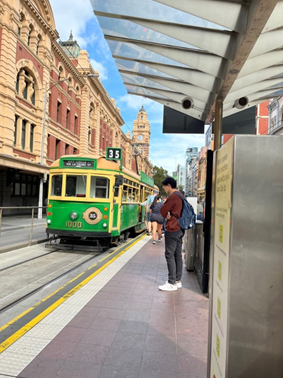
The day began with a decent English breakfast, while Eleonore made do with a croissant and a cappuccino. We then made our way to the stop for the historic streetcar that runs in a circle around Melbourne’s city center – always clockwise and free like all transport in the city center.
Finally, one of the old streetcars arrived and we headed towards Federation Square on the Yarra River. A hustle and bustle of people awaited us there, as the square is one of the main attractions: the beautiful train station in Flinders Street, diagonally opposite St. Paul’s Cathedral and along the main street to the shopping mile. St. Paul’s is a church modeled on a huge English cathedral.
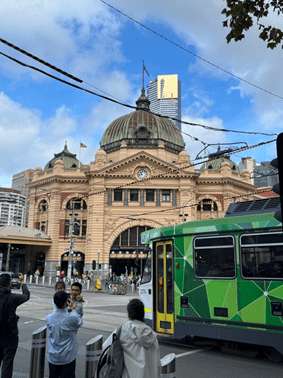
We took the free streetcar around the corner to the Old Treasury Building, which is now a history museum. The old rooms show the development of the city and state of Victoria from the gold rush to the present day.
Unfortunately, we rested too long, so an evening tour of the City Circle and the recommended short trip to St. Kilda were not enough. To get there, you have to buy a kind of train ticket, which we didn’t want to do. We decided to visit the Melbourne Center, a trendy shopping mall. Deterred by the masses of tourists from Asia, we struggled back to the hotel and found a Chinese noodle restaurant right next door. We tucked into the freshly prepared noodles, along with two beers from Tsingtao.
Away from Australia
The flight back to Singapore left around noon, so we left at 9 a.m. with plenty of time to sum up Australia. If someone asked me which of these I liked best, I would say Sydney, even though we only visited the inner cities, apart from Adelaide. I loved the old market hall and the suburban seaside resort of Glenelg. If “The Overland” train hadn’t departed from there, we wouldn’t have visited the city.
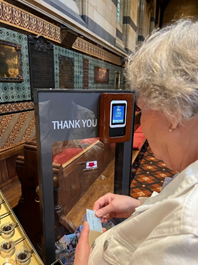
The city center of Melbourne is built up like a grid and you can get everywhere by streetcar, but we had our difficulties with orientation. Wherever we went, there were crowds of people everywhere, which is hardly surprising with a population of 5 million and the swarms of tourists from Asian countries. The picture shows my wife at the donation machine in St. Paul’s.
No, Darwin is still missing, but we didn’t see much there because it was simply too hot. The excursions on offer to the interesting areas would have taken the whole day and were far too expensive if you booked them via the ship. That left the two vacation resorts of Port Douglas and Airlie Beach in Queensland. They were beautiful and the excursions there were unique, especially the sightseeing flight over the Great Barrier Reef.
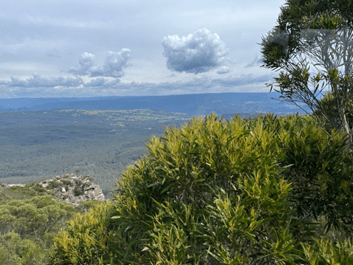
As I say goodbye to Australia, the song “Waltzing Matilda”, Australia’s second national anthem, comes to mind. The song is about a wanderer who has stolen a sheep. I have this song in my head as the bus driver sang the first verse at the end of the journey through the Blue Mountains, in the German translation: “Come with me on the waltz with Matilda (the raincoat) in my knapsack.” Yes, that’s how I take Australia with me as a memory and I didn’t shy away from the long journey there.
Done
The seven hours in the Dreamliner of the low-cost airline were different: Eleonore flew in Business Class in a dignified atmosphere, I flew in Economy Class, surrounded by families with numerous small children and their luggage. Somehow I survived the flight from Melbourne to Singapore, across Australia, with a flight distance of 6,000 km.
When you enter Singapore, you have to fill out an SG Arrival Card. You have to state who you are, where you come from, what you want to do in Singapore, whether you are healthy and not a criminal. This is an effort that not everyone can handle. There are machines not far from the immigration office where you can make the necessary entries. And since we are not drug junkies, the immigration machine let us through.
The cab system in Singapore is very well organized and nobody has to wait long. However, the cab driver was not to be envied that evening: It was pouring with rain – a real tropical storm that didn’t even stop at the hotel. It was only with the borrowed umbrella that the cab driver dared to put our suitcases outside the hotel door. Even after checking in, the rain didn’t stop. And soon we were in bed.
Dripping wet through the botanical garden
The next day initially had a bad side: the breakfast staff didn’t understand that we only wanted a coffee and a croissant and not a full breakfast. Now for the good side. There are two different metro stations to get to the Botanical Gardens in Singapore. We opted for the southern one. Before we set off, the friendly station attendant told us that we didn’t need to buy a metro card, but simply had to place our credit card on the display at the barrier.
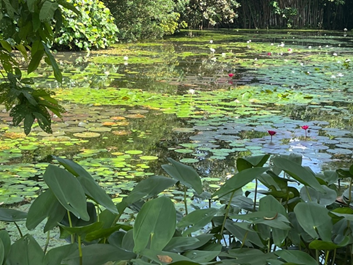
The Botanic Garden is Singapore’s ornament and really beautiful – if it weren’t for the sweltering 32 degrees! They were getting on our nerves. That’s why we took a break in the middle of the garden. There were toilets and the opportunity to buy chilled drinks. Then it was another 1.3 kilometers to the north exit. Lame-footed, we reached the metro, which was supposed to take us to the food court we had chosen. But we couldn’t find it. So we ended up at a Chinese market with a typical restaurant attached.
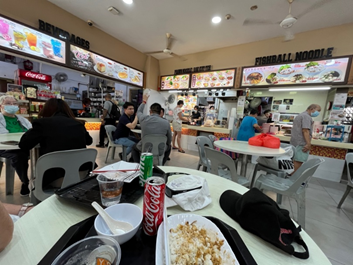
It was mainly Asians who bought food to take away or opted for a dish from the various stalls, which they ate on the spot. We also ate there for a few Singapore dollars. After changing public transport a few times, we were completely drenched in sweat in our chilled hotel room. We took a shower, rested for a while and thought about our last evening in Singapore.
We thought we would go back to the “Garden by the Bay” of the “Marina Bay Sands” in the evening to see the huge roof, which resembles a ship and is enthroned on three hotel towers. The garden and the hotel were supposed to be illuminated, but it was still too early.
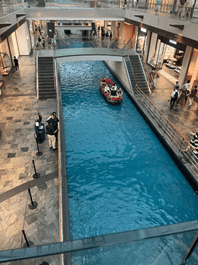
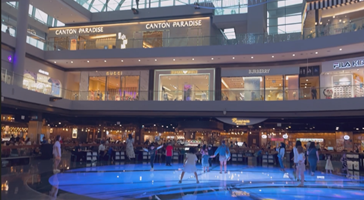
So we ended up in a huge mall with four levels. On the first floor, there was a canal with small boats. On the upper floors, there were luxury stores selling all the well-known brands. We were invited into some of them, but we didn’t go in. Did we look that wealthy? Then there was the tea-time café. We were not tempted by the silver service. Further down, the people were catered for, there were plenty of self-service restaurants. And what looked like an ice rink turned out to be a cleverly flattened surface where the children ran riot.
We enjoyed the view of Singapore from the terrace before making our way to the garden. We walked along the river to the metro station and rode to Clarke Quay, the old river port near our hotel.
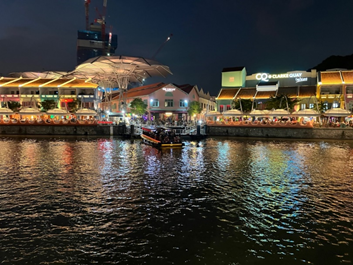
There we found a Spanish restaurant called Cuba Libre Open Air right by the river. They served Spanish dishes and, because it was happy hour, affordable drinks too. Interestingly, it was a European-looking crowd. On the way to the hotel, we donated our coins to a street musician playing tunes from the 70s.
Departure
On the day of departure, we stood in front of the hotel with our suitcases packed and waited for the cab to Changi International Airport. Less than five minutes later, the cab arrived and we were on our way. After less than half an hour, we were at Terminal 3 of the airport. Our hand luggage had to go through the drug check, which we mistook for the security check.
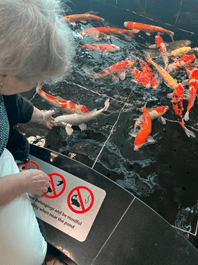
We then had a small breakfast of cinnamon buns and cappuccino. We noticed in a pool next to us that it was stocked with large koi carp, each fish probably worth a fortune. The koi were not allowed to be fed, but you could touch them. We found that it was a great way to pass the time.
Our flight to Frankfurt was originally scheduled to depart from gate B7, but a friendly Singapore Airlines employee sent us and everyone else waiting to gate A10. We boarded the large Airbus in groups, starting with the Premium Economy and higher class passengers.
During the long flight, I started to think about our long journey. We were now traveling for 24 days, not to the end of the world – we were already there – but to Down Under, which is not exactly around the corner. In total, we covered 11,000 km to the ship, 3,500 km on the ship, 400 km regionally, 1,300 km by domestic flight, 800 km by train, 6,000 km back to Singapore and 30 km on foot. It was another 11,000 km back home. Add to that another 220 km for the train to the flight and back. That adds up to quite a lot.
I also noticed: With this type of travel, you have to stay “on your toes” – apart from the 30 kilometers of walking. Nobody takes your hand, and you can’t insist on your age. You have to keep to deadlines, otherwise you’ll miss the plane, the boat or the train. This is a very positive aspect of traveling.
Of course, you can also spend your money in other ways: paying off the house, buying a nice car, saving for the grandchildren and so on. We have our priorities when it comes to traveling, the really far-flung ones, and they were mostly nice.
 The highs and lows of cruising, sometimes described in literary terms